In a hypothetical session of Forza Horizon 6, the scene unfolding around a Mazda-heavy convoy captures what the Horizon formula consistently aims for: emergent car culture, chaotic multiplayer pacing, and mechanical expression through tuning rather than raw power alone.
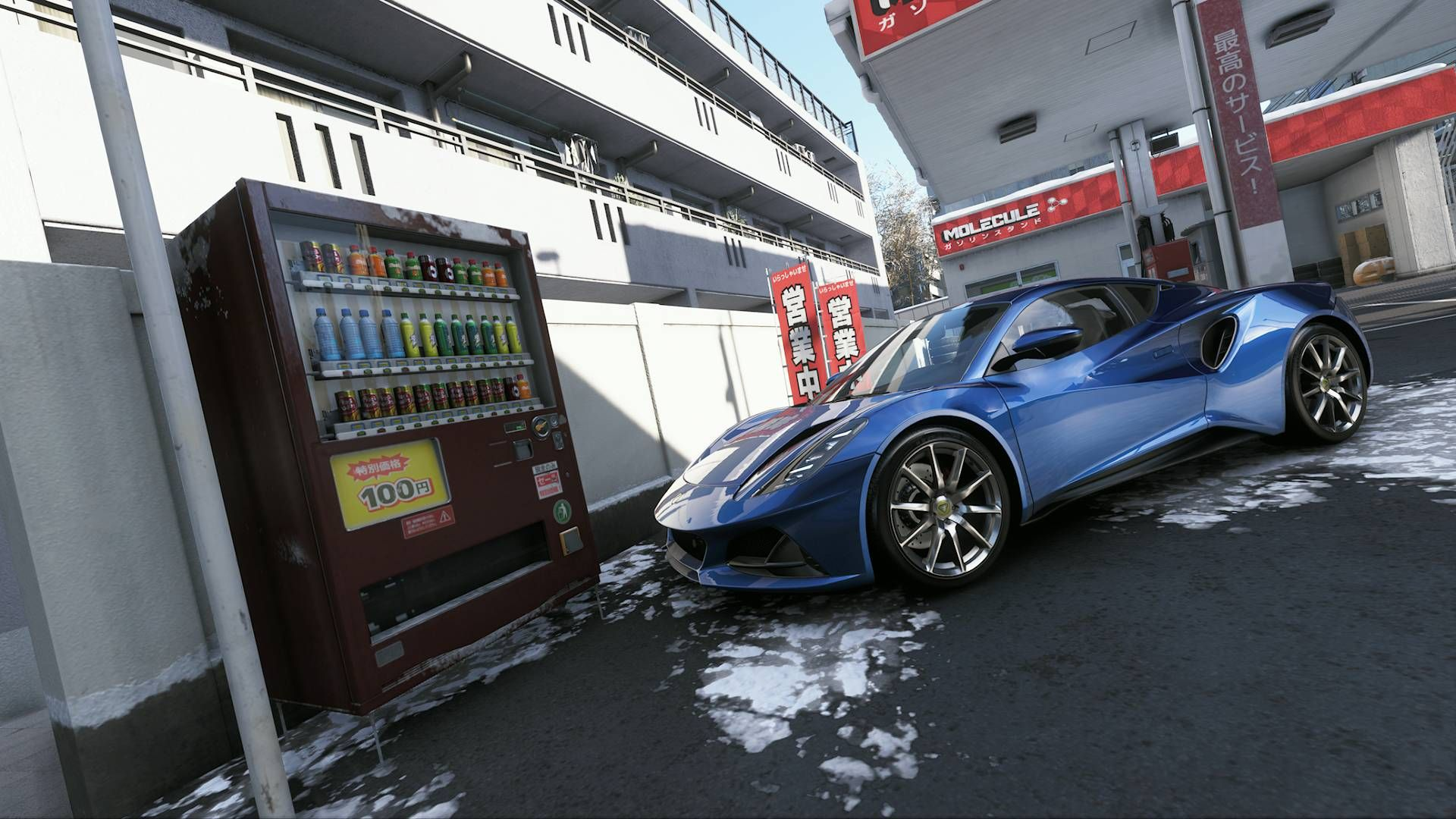
This particular run revolves around a spontaneous rotary meetup—RX-3s, FCs, FDs, and FBs gathering near a Tokyo-style home spawn point, looping through a gas station hub, and ultimately forming a convoy toward Mount Haruna. What begins as casual parking-lot showcasing quickly escalates into a structured-but-fragile mountain cruise filled with drifting, traffic dodging, and elevation-driven handling challenges.
Mazda Rotary Meetup Composition
The convoy is heavily dominated by Mazda rotary platforms, each contributing a different handling and tuning identity.
| Vehicle Platform | Role in Convoy | Character Trait | Typical Build Focus |
| RX-3 | Lead chaos unit | Lightweight, twitchy | High RPM drift bias |
| FC RX-7 | Style anchor | Balanced drift/GRIP hybrid | Visual + mid power |
| FD RX-7 | Stability reference | High-speed control | Aero + grip tuning |
| FB RX-7 | Wildcard build | Raw, inconsistent drift angle | Low traction setup |
| “AE / mixed traffic” | Environmental pressure | Unpredictable interference | N/A |
This mix creates a layered driving dynamic: older chassis respond aggressively to throttle modulation, while newer RX-7 platforms stabilize convoy pacing when traffic density increases.
Route Breakdown: Tokyo Hub → Gas Station → Mount Haruna
| Segment | Driving Condition | Core Challenge | Player Behavior |
| Tokyo house spawn | Static showcase | Car meet formation | Livery inspection, idle revving |
| Gas station regroup | Low-speed cluster | Organization breakdown | Single-file formation attempt |
| Urban cut-throughs | Tight alleys | Navigation confusion | Improvised route splitting |
| Mount Haruna ascent | Elevation + rain | Traction instability | Drift corrections + braking discipline |
The transition from static meet to mountain ascent is where the simulation layer of Forza Horizon 6 becomes most apparent: traffic AI, wet surfaces, and elevation changes force adaptive driving rather than scripted performance.
Performance Build Specification (RX Platform Example)
A representative FC RX-7 build from the session shows a mid-tier performance target tuned for controlled drift stability.
| Category | Upgrade Choice | Resulting Effect |
| Intake | Sport intake | Faster throttle response |
| Fuel system | Sport fuel system | Stable mid-range torque |
| Ignition | Sport ignition | Improved RPM consistency |
| Turbo | Race turbo | Power ceiling expansion |
| Cooling | Race intercooler + oil cooling | Heat stability on long runs |
| Drivetrain | Race driveline | Reduced drivetrain loss |
| Differential | Drift differential | Angle control optimization |
| Brakes | Full race brakes | Late braking control |
| Tires | Sport 245 width (square setup) | Balanced grip/slide ratio |
| Weight reduction | Full stage reduction | Improved rotation speed |
Final output range: ~450 HP (approx. 442–453 tuning window)
Handling Behavior Profile (Drift-Oriented Setup)
| Parameter | Setting | Driving Outcome |
| Tire compound | Sport | Predictable slip curve |
| Tire width | 245 front/rear | Neutral rotation bias |
| Wheel size | 18” | Faster directional transitions |
| Suspension | Drift springs | Lowered center of gravity |
| Differential | Drift tune | Sustained angle retention |
| Weight | ~2700–2900 lbs | High responsiveness |
This configuration prioritizes angle maintenance over grip stability, which aligns with convoy-style drifting where visual cohesion matters more than lap efficiency.
Visual Customization Layer (Meta Identity)
A defining feature of the session is not just performance tuning, but aesthetic identity-building:
- Chrome wheels with unconventional coloration (notably pink accents)
- Mixed vinyl groups and sticker layering
- Window tint experimentation for contrast saturation
- Partial livery usage instead of full wraps
These choices reflect a common Horizon-era philosophy: visual individuality is treated as part of performance expression rather than separate from it.
Credit Economy & Build Progression
In a progression-driven environment like Forza Horizon 6, vehicle experimentation is tightly linked to in-game currency flow.
| Credit Use Case | Function |
| Engine swaps | Unlock higher performance ceilings |
| Tire and drivetrain tuning | Fine-tune handling identity |
| Cosmetic customization | Visual differentiation in convoys |
| Vehicle acquisition | Expanding platform variety |
Players often rely on structured resource management, including Forza Horizon 6 Credits, to sustain iterative tuning cycles. In broader progression systems, some users also engage in external acquisition methods such as buy FH6 Cars strategies to expand garage diversity faster, especially when experimenting with multiple rotary builds or drift variants.
Convoy Dynamics: Why the Chaos Works
The most important element of this session is not the tuning itself, but how the convoy behaves under imperfect coordination:
- Formation constantly breaks under acceleration spikes
- Traffic interference forces reactive lane switching
- Elevation changes destabilize drift angles mid-corner
- Players self-organize at gas station checkpoints
- Route confusion becomes part of gameplay flow
This emergent disorder is precisely what defines large-scale multiplayer driving in Horizon-style systems: controlled instability producing shared narrative moments.
Closing Overview: Build Philosophy of the Mazda Meetup
The Mazda convoy demonstrates a core principle of modern open-world racing design—performance builds are not isolated engineering problems, but social instruments. Every tuning decision, from turbo selection to tire width, is filtered through how the car behaves in a group context rather than a vacuum.
What emerges is a layered system: mechanical tuning supports aesthetic identity, which in turn supports convoy behavior, which ultimately defines the experience more than any single race outcome.