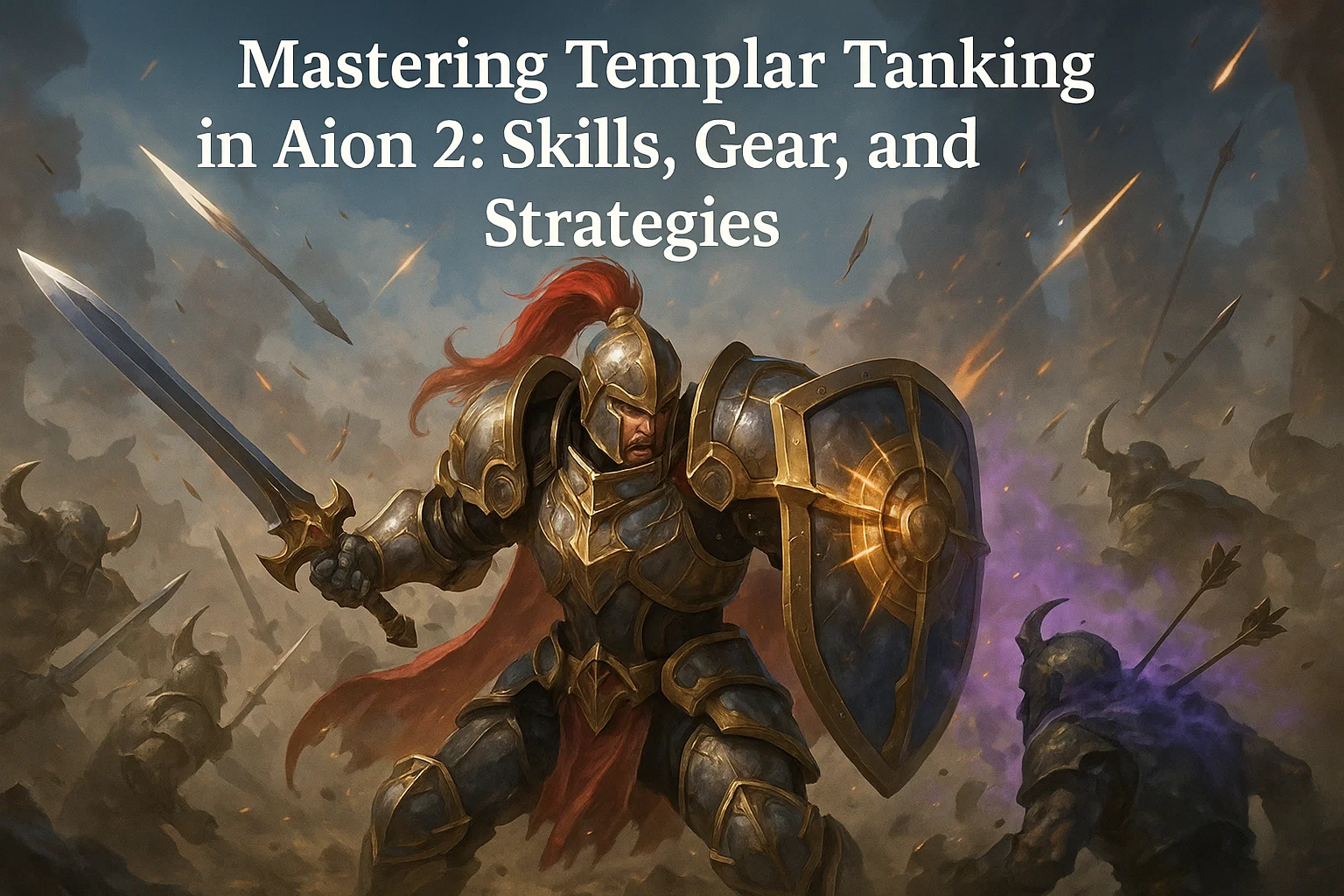
If you’ve spent any time in Aion 2 lately, you’ve probably noticed how different tanking feels compared to older MMOs. Templars aren’t just meat shields anymore. With the game’s faster combat flow and tighter encounter design, the class shines when played with intention and rhythm. After digging through the details in the video and testing the approach myself, I’ve put together a clearer, player-friendly breakdown of how this build works, why it works, and how you can get the most out of it whether you’re exploring early dungeons or preparing for high-pressure group content.
Understanding the Build’s Identity
This Templar setup revolves around controlled aggression rather than raw damage or constant panic-blocking. The idea is simple: you don’t just stand there absorbing hits—you actively manipulate the flow of each fight. Key skills like Furious Strike, Shield Smite, and Debilitating Smash create a loop that generates threat, protects the group, and opens windows for your team to pump damage without interruption.
Compared to lighter classes, you’ll feel a noticeable weight to every movement. But the build’s revised animation flow and shorter repositioning tools prevent you from ever feeling sluggish. When played right, you end up directing enemy movement instead of reacting to it, making you the anchor of every encounter.
Skill Priorities: Building a Rhythm Instead of a Rotation
The video breaks down the skills in detail, but the real takeaway is the rhythm they create. Furious Strike immediately grabs enemy attention and fuels your MP economy. Shield Smite buys breathing room with a reliable stun. Debilitating Smash punishes enemies the moment you successfully block. Warding Strike keeps you topped up with sustain. Annihilate closes gaps in control, and Defiance acts as your emergency stabilizer when bosses try to knock your entire rhythm apart.
Approach these skills not as isolated actions but as a flowchart:
grab → control → punish → stabilize → reset as needed.
Once this becomes muscle memory, tanking feels smooth rather than stressful.
Passive Skills and Why They Matter More Than Most Players Think
Templar passives indirectly fuel your survivability by enhancing your block-triggered skills, reducing stagger time, and buffing mitigation whenever you’re under pressure. Many Templar players underestimate how important these triggers are. The more consistent your blocks, the cleaner your counterattacks, and the easier it is to maintain threat without spamming every cooldown at once.
If you’re investing resources early on, prioritize passives that strengthen block uptime and shorten recovery animations. A small improvement here goes a long way in stabilizing difficult pulls or surviving sudden boss spikes.
Stigma Choices That Define the Build
This particular setup leans on four stigma picks that reinforce the core gameplay loop:
Armor of Balance keeps you steady during relentless pressure, Noble Armor strengthens long-term defense, Taunt ensures you can lock down high-priority units at crucial moments, and Shield of Protection provides group-wide value by helping your team survive messy mechanics.
These choices make your Templar feel less like a solo wall and more like a true commander who shapes the battlefield for the entire squad.
Gearing for Efficiency Instead of Pure Defense
Gear choices in Aion 2 can be overwhelming. Instead of chasing raw numbers, this build focuses on balance. Guardian Deconus accessories provide defensive stability and block consistency. Heavy armor remains mandatory—not only for defense, but for how well it synergizes with your passives. The Guardian Deconus long sword stands out due to its block bonuses and accuracy, which help your taunts land reliably.
This is also where many players start thinking about resources and progression. If you’re planning to grind for materials or expand your crafting pathways, keep an eye on the Aion 2 Kinah economy, especially as more players start gearing up for end-game content.
Stat Priorities and Practical Tips for PvE and PvP
Might, Dexterity, and Intelligence form your main stat trio. Accuracy and parry help smooth your combat flow, while MP sustain ensures your taunts and mobility tools remain online during longer fights. Constitution can stay low unless you’re building specifically for PvP longevity.
In group PvE, your responsibility is simple: become the boss magnet. Keep enemies facing away from your allies, manage taunt timing, and avoid overlapping cooldowns. In PvP, timing matters even more. You’ll rely on stuns, knockdowns, and defensive windows to outlast burst classes while closing space on mobile targets.
Daevanion Board: A Smarter Way to Allocate
The Daevanion system can tempt you into filling every node you see, but that usually leads to wasted resources. Follow a simple rule: defense first, then damage, then skill level, finally cooldown reduction. Prioritize boosts to your core skills—Furious Strike, Shield Smite, Debilitating Smash, Warding Strike, Annihilate, and Defiance. These upgrades create noticeable improvements in threat control and survivability.
Crit resistance, stagger reduction, and movement speed nodes are also worth grabbing early, especially if you plan to switch between PvE and PvP regularly.
Gameplay Flow: How to Make This Build Actually Feel Good
The best Templar players don’t run headfirst into every pack—they approach fights with a clear plan. Close the distance, stabilize the pull, trigger blocks intentionally, punish openings, and use Defiance proactively rather than spamming it after you’re already locked down.
Small adjustments like repositioning enemies away from your healer or making sure you aren’t stacking cooldowns unnecessarily make an enormous difference. Once you internalize this flow, the class feels incredibly rewarding.
Additional Notes for Progression
As you gear up, you’ll probably compare different sources or wonder how to stay competitive. If you’re actively farming or experimenting with marketplaces, you may see discussions about players trying to buy Aion 2 coins. Always be mindful of where your resources come from and stick to trusted community-approved methods for upgrades and trading.
For broader player-to-player exchanges, many people rely on established sites like U4GM for reference when checking market trends or understanding item values. Even if you don’t purchase anything, keeping up with price benchmarks helps you avoid overpaying in the in-game market.
If you enjoy being the calm center of chaos in group play, this Templar build is one of the most complete and satisfying ways to tank in Aion 2. It rewards patience, precision, and good timing, and once you settle into its rhythm, you’ll feel your influence over every encounter grow stronger. With the right gear, smart stat allocation, and a confident understanding of your control tools, you’ll become the kind of tank every group wants.
PvE Walkthrough: Countdown to Aion 2: Release Window, Features & Risks