If you’ve spent any time in Roblox gardening games, you’ve probably noticed that managing your pets efficiently can make or break your progress. In Grow a Garden Pets, the way you organize and use your pets can drastically change how smoothly your garden grows and how fast resources flow from one area to another. In this post, I want to share some tips on how to centralize your game flow using pets, without overcomplicating things.
Understanding the Role of Pets in Flow Management
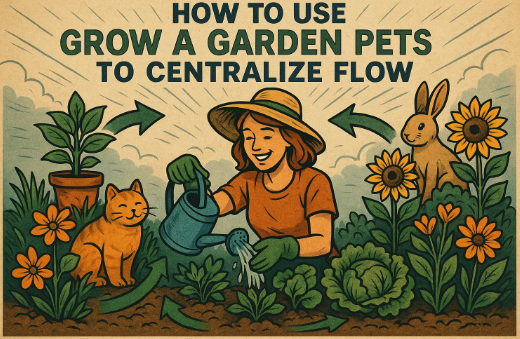
Pets in Grow a Garden aren’t just cute companions—they are essential for boosting efficiency. Each pet has a unique ability that can help you gather resources, speed up growth, or even generate extra coins. When you think about “centralizing flow,” it’s all about positioning your pets strategically so that every action you take in your garden feeds into a smoother, more predictable resource cycle.
Personally, I like to focus on pets that offer consistent, passive boosts. That way, even if I’m exploring other areas or taking a break, my garden continues to benefit. This approach is especially helpful for younger players who might not spend hours grinding every day.
If you’re new and looking to strengthen your collection, you can buy Grow a Garden pets from trusted sources within the Roblox community. This can give you a small but meaningful advantage without making the game feel unfair. I’ve found that adding just one or two high-impact pets can immediately improve the overall flow of my garden.
Positioning Pets for Maximum Efficiency
Once you have your pets, the next step is figuring out where they should be. Centralization isn’t about clustering everything in one corner—it’s about creating “resource hubs” where pets can interact with multiple growth points efficiently. For example, placing a pet near a row of flowers that produce coins can help you collect resources faster, while another near fruit trees might speed up growth cycles.
A little trick I use is to observe where resources tend to pile up and then assign pets that boost collection or speed in those areas. You’ll start noticing patterns pretty quickly, and adjusting your setup becomes almost second nature. It’s a bit like playing Tetris with living, moving pieces.
Using Boosts and Store Options Wisely
In addition to managing pets, understanding where to get boosts or items can streamline your garden. I usually check U4GM reliable Grow a Garden store when I need rare pets or upgrades. They tend to have a wide selection, and knowing which items to pick can save you a lot of trial and error.
It’s important to remember that using these stores strategically makes a bigger difference than just trying to collect everything at once. I tend to focus on items that complement my current pets’ abilities, rather than chasing the flashiest options. This keeps my resource flow predictable and manageable, which is key for centralization.
Tracking Progress and Adjusting as You Go
Even with pets and boosts, no setup is perfect from the start. One of the most fun parts of Grow a Garden Pets is experimenting with different layouts and seeing how slight adjustments affect flow. Keep an eye on which areas of your garden are underperforming and think about whether moving a pet or adding a new one could help.
I like to keep notes on my layout changes. For example, if I notice that flowers in the northern section consistently lag behind, I might place a speed-boosting pet nearby. Over time, these small tweaks build into a system where every part of the garden contributes efficiently to the overall flow.
Combining Pets for Synergy
Centralizing flow isn’t just about positioning—it’s also about synergy. Certain pets’ abilities can complement each other when placed strategically. For instance, a pet that accelerates growth next to one that automatically collects coins can create a mini-cycle that reduces manual effort significantly.
Experimenting with these combinations is part of the fun. I’ve found that when pets “click” with each other, my garden feels almost alive, and watching the resource loops unfold is surprisingly satisfying.
Tips for Younger Players
Since Roblox attracts a younger audience, it’s worth keeping things simple. Don’t stress about having the perfect pets or layout from the start. Focus on building a system that you understand and can manage easily. Small improvements over time are more rewarding than trying to max everything immediately.
A friendly tip: sometimes the simplest pets, when placed thoughtfully, outperform the rarest ones in chaotic setups. Observing the garden and making smart placement decisions often matters more than chasing every new pet release.
Keeping Your Garden Organized
Finally, as your collection of pets grows, organization becomes crucial. I suggest grouping pets by function—collectors, growers, or hybrid types—so you can quickly see where adjustments are needed. This makes it easier to spot inefficiencies and tweak your setup without feeling overwhelmed.
For players looking to expand their pet collection safely, U4GM can be a helpful reference for items that enhance your garden’s flow. It’s worth checking periodically, especially if you want to experiment with new combinations without losing track of your current strategy.